

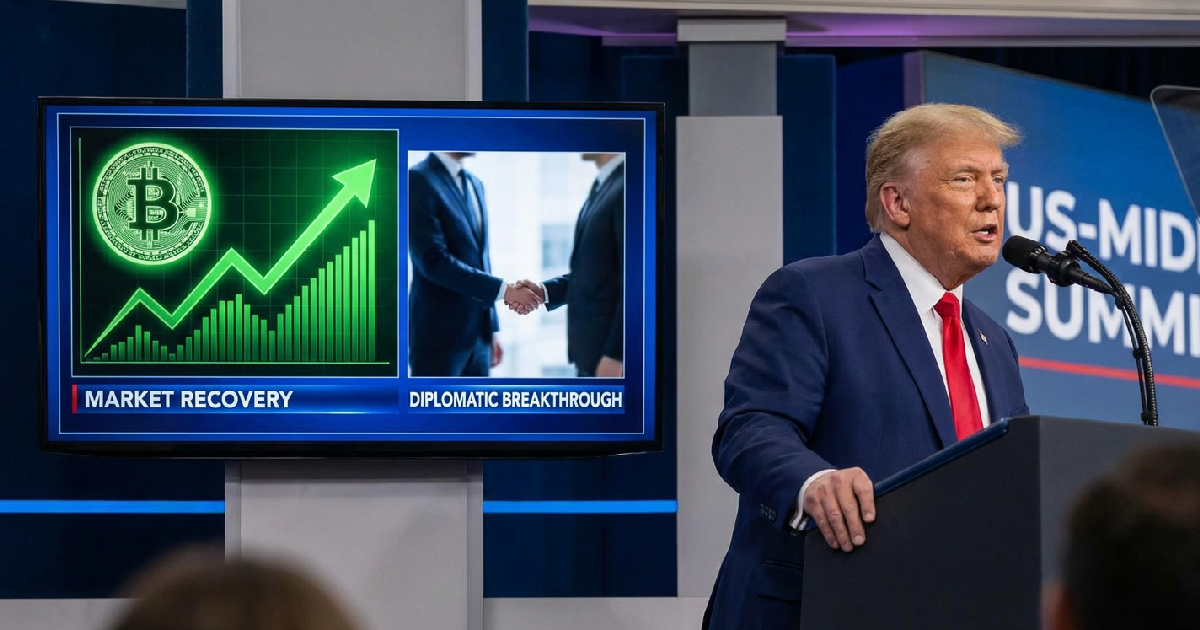
Crypto Markets Show Recovery Following Reported Diplomatic Breakthrough
Digital asset markets have shown signs of a significant shift in sentiment following reports of a diplomatic breakthrough in the Middle East. News of a reported temporary ceasefire involving regional tensions has apparently lowered the global risk profile, triggering a recovery for risk-on assets that had previously been weighed down by the threat of instability. While the details of the arrangement remain fluid, the perceived reduction in immediate geopolitical friction has provided a relief valve for active traders.
For several days, the shadow of potential escalation had reportedly driven capital toward defensive havens, but the reprieve offered by this diplomatic window has encouraged a return to speculative interest. Markets that were recently characterized by high volatility and cautious sentiment are now seeing a notable influx of liquidity as the immediate threat of conflict appears to recede. This movement underscores the continuing sensitivity of the decentralized economy to shifts in the global political landscape.
De-escalation triggers liquidity rotation
The reaction within the cryptocurrency sector was swift as the reports reached trading desks. Prices for several major digital assets moved upward, potentially catching some short-sellers off guard as the market pivoted from a defensive posture. This shift is not merely a change in mood; it reflects the fundamental mechanics of how geopolitical security impacts international finance. Regional stability often correlates with more predictable environments for global trade, which typically acts as a tailwind for digital assets.
Institutional interest, which had reportedly cooled during the height of recent tensions, appears to be returning to the fold. Some market observers suggest that a “risk discount” is being priced out of the sector as the situation stabilizes. This shift in behavior mirrors broader trends seen in global capital flow updates for stocks and bonds, where some investors are seen rotating away from traditional safe-haven assets back into more volatile, high-growth sectors.
The current market behavior suggests a period of accumulation. As liquidity flows back into the ecosystem, participants are once again focusing on project viability. However, the sustainability of this rally remains a point of contention among analysts, many of whom are watching to see if current price levels can hold if the diplomatic situation changes.
Policy and the digital economy
The reported role of high-level mediation in this truce has added a layer of complexity to the recent market movement. Given that some current political figures have positioned themselves as proponents of lighter regulation for the blockchain sector, diplomatic successes are often viewed by market participants as a precursor to a more stable environment for digital commerce. This sentiment appears particularly relevant for those following developments involving David Sacks and PCAST, where the intersection of government policy and emerging technology remains a primary focus.
Despite the current optimism, many traders remain wary due to the temporary nature of the reported agreement. A short-term ceasefire is rarely a permanent peace treaty, and the market could face a renewed period of volatility if the current diplomatic window closes without a more durable arrangement. For the moment, however, the removal of an immediate threat has allowed the sector to catch its breath. This pause in hostilities may also provide a boost to associated sectors like gaming and esports, which rely heavily on stable cross-border digital payments.
Market resilience and the path forward
This recent price action serves as a reminder of how closely the crypto market is tied to macroeconomic catalysts. While the underlying blockchain technology functions independently of national borders, the institutions and individuals providing the capital are deeply influenced by geopolitical developments. The current bounce has reportedly mitigated a portion of recent losses, though the true test lies in the coming weeks.
Investors are advised to remain cautious and look at the broader context of recent market shifts. Understanding the depth of previous pullbacks is essential for gauging where new support levels might be established. For instance, looking back at recent liquidation data and previous price drops can provide necessary perspective on market health during periods of rapid recovery.
As the situation develops, the focus will likely remain on whether this diplomatic relief leads to a sustained period of growth or if it represents a temporary “relief rally” before further volatility. For now, the digital asset space is benefiting from a rare moment of geopolitical calm, allowing for a renewed focus on innovation and adoption rather than crisis management.