

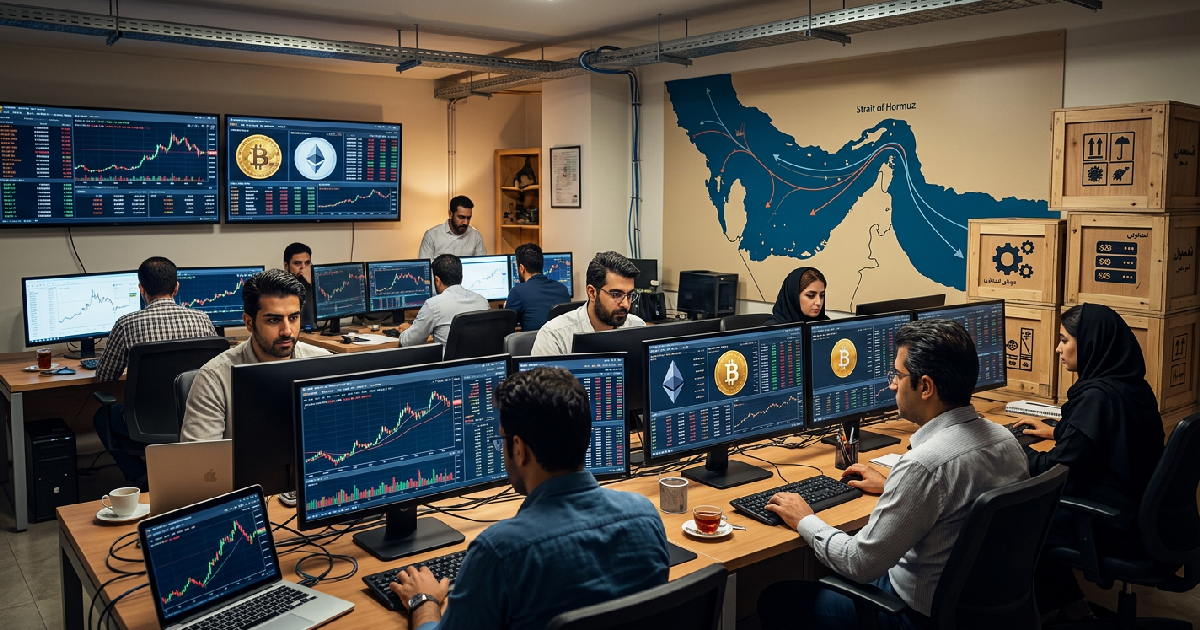
Bitcoin Replaces Oil for Iranian Firms Amid Strait of Hormuz Tensions
Iranian businesses are increasingly turning toward Bitcoin and other digital assets to bypass international sanctions and financial isolation following a series of recent military escalations in the Strait of Hormuz. Reports of increased tension in the region have frequently corresponded with spikes in global crude oil prices, reflecting the high stakes of maritime security. While government officials continue to monitor the volatility, the persistent friction has reinforced a growing reliance on cryptocurrency for cross-border trade in a region where traditional banking systems remain largely inaccessible.
The geopolitical friction coincides with expanded naval operations intended to secure global shipping lanes through the deployment of advanced surveillance drones and maritime fleets. As the physical corridor for oil becomes a focus of international military strategy, the digital corridor for capital has seen a corresponding rise in activity. Bitcoin serves as a vital liquidity lifeline for a private sector that is effectively cut off from mainstream payment networks and Western lines of credit.
Sanctions Drive Crypto Adoption for Iranian Commerce
For many Iranian entrepreneurs, digital currency has moved from a fringe investment to a fundamental necessity for daily operations. Analysts suggest that foreign trade for Iranian firms is now exceptionally difficult to conduct without the use of digital assets. The inability to use standard international financial rails has forced a mass migration toward decentralized solutions that do not require the permission of global clearinghouses.
The current economic environment shares some similarities with other regions under heavy financial pressure where market shifts in 2026 have often been dictated by sudden regulatory or geopolitical shocks. In Tehran, this has manifested in exchange boards displaying live crypto prices alongside traditional fiat rates. Some high-end businesses have even reportedly begun accepting direct wallet transfers for services to maintain cash flow during periods of high inflation.
Mining as an Industrial Strategy
Iran’s unique advantage in the crypto space stems from its massive energy reserves, which provide subsidized, low-cost electricity for industrial activity. Reports suggest the cost to mine digital assets in the region is significantly lower than global averages, creating a profit margin that has incentivized mining in unconventional locations. Various facilities have reportedly hosted mining rigs to generate hard currency that can be moved across borders instantly without traditional oversight.
However, this “digital oil” strategy has come with a heavy physical cost. The energy drain from these operations has occasionally led to power grid instability and rolling blackouts in major cities. This situation highlights the delicate balance between finding financial survival through decentralized tech and maintaining national infrastructure. We have seen how liquidity drops can hurt holders when major price milestones are lost, and Iranian firms are particularly vulnerable to these swings given their lack of institutional hedging instruments.
Operational Limits and the Trust Deficit
While Bitcoin effectively moves value, it has not yet solved the structural trust issues inherent in international trade. Many Iranian transactions still rely on informal agreements and decentralized networks that lack the legal protections found in regulated markets. This creates friction when dealing with international partners who must maintain strict rules regarding contract labeling and formal banking trails to avoid secondary sanctions.
The volatility of the market also remains a constant threat. For a business in Tehran, a sudden drop in asset value isn’t just a portfolio adjustment—it is a direct reduction in their ability to purchase raw materials or industrial components from abroad. Economic experts note that even as the U.S. Treasury targets “shadow banking” infrastructure through restrictive policy measures, the decentralized nature of blockchain makes total enforcement difficult.
Future Outlook for Sanctioned Markets
Looking ahead, the integration of automation and algorithmic trading may further complicate the enforcement of trade restrictions. As seen with the news regarding U.S. leadership in AI assets, the intersection of technology and finance is becoming a new front line of geopolitical competition. For the Iranian private sector, the goal is reaching a state where digital assets provide a permanent, parallel economy that functions regardless of maritime blockades.
Ultimately, crypto provides a tactical escape hatch for businesses operating under duress, but it remains a volatile substitute for a functioning global trade relationship. As long as the Strait of Hormuz remains a flashpoint for conflict, the demand for digital alternatives to traditional trade is likely to keep growing, further decoupling regional commerce from the traditional financial world.