

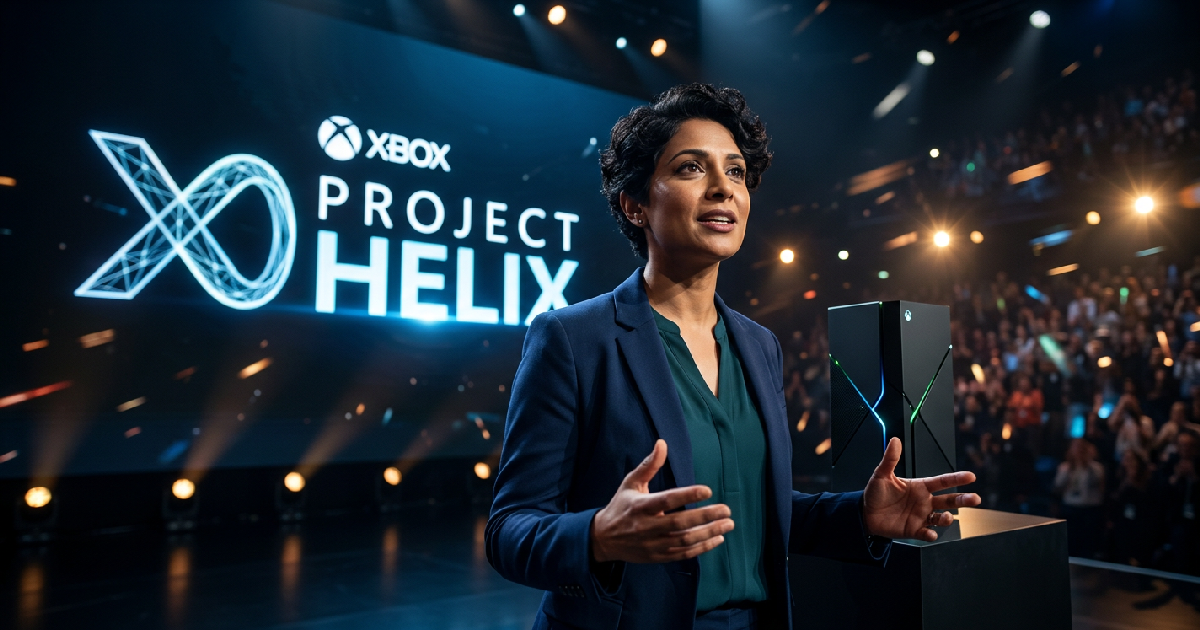
Asha Sharma Launches Xbox Rebrand with Project Helix Hardware Focus
Xbox has officially initiated a major brand overhaul under the new leadership of Asha Sharma, following the retirement of veteran chief Phil Spencer. During a week of strategic reveals, Sharma and Matt Booty confirmed the development of Project Helix, a next-generation console designed to unify PC and console gaming while addressing the platform’s recent struggles against Nintendo and Sony. The pivot comes as the company acknowledges that Game Pass growth has reportedly stalled and previous multi-platform experiments under Former President Sarah Bond failed to resonate with the core audience.
The transition marks a definitive end to the Spencer era, which was defined by massive studio acquisitions that have yet to consistently deliver major results. Sharma’s approach appears to be a return to “prestige” gaming, focusing on reclaiming the brand’s identity as a hardware leader. This includes the goal of making Project Helix a premier machine on the market, with potential integration for third-party storefronts like Steam. As Microsoft navigates this change, it faces the same macroeconomic hurdles seen in other sectors, where Sony raises PS5 prices to combat rising component costs, signaling that hardware will not get cheaper for consumers anytime soon.
Project Helix and the Vision for Unified Hardware
The centerpiece of this rebranding is Project Helix. While specific technical specifications remain under wraps, internal communications shared with employees describe it as a “leading platform” meant to bridge the gap between traditional console play and the flexibility of PC gaming. The strategy suggests a move away from the “Everything is an Xbox” philosophy that characterized the last few years, which many critics argued diluted the value of owning physical hardware.
Rumors have circulated that the next Xbox might natively support the Epic Games Store or Steam. While Microsoft is currently re-evaluating its stance on certain features, the goal is to provide more choice to the player base. By allowing players to access their existing PC libraries on a console, Xbox hopes to lure back enthusiasts who migrated to high-end rigs or handheld PCs over the last several years.
A Shift in Exclusivity and Game Pass Pricing
The company is also reportedly adjusting its pricing and subscription models to better reflect market demand. Asha Sharma has reportedly authorized a price adjustment for Game Pass, admitting that the service had reached a ceiling in terms of affordability for many users. However, this shift comes with a significant caveat: Call of Duty, one of the industry’s most lucrative franchises, will reportedly no longer be available on the service on its launch day. Instead, new entries in the series are expected to arrive on the subscription platform after a significant delay from their initial release.
This decision highlights the tension between maintaining a subscription model and generating direct sales revenue. While titles like Forza Horizon 5 and Indiana Jones and The Great Circle have found success on rival platforms like the PS5, the “Game Pass first” model reportedly impacted the premium purchase revenue Xbox once relied on. By delaying Call of Duty’s arrival on the service, Microsoft is betting that fans will choose to buy the game at full price rather than wait for it to be added to the library later.
Rebuilding the Prestige of First Party Studios
Asha Sharma faces the task of making Xbox a dominant cultural force again. The previous strategy of porting smaller titles like Pentiment and Grounded to other consoles was viewed by some as a subtle admission of a shift in market position. To combat this perception, the new leadership is expected to lean heavily into upcoming blockbusters like Fable to prove that the Xbox ecosystem remains a primary destination for high-fidelity experiences. The current market is volatile, much like how liquidity shifts in the crypto market can suddenly alter investor confidence; Microsoft needs a run of critical and commercial hits to restore its standing.
There is also the matter of the failed Gears of War: Reloaded remaster, which served as a reminder that nostalgia alone cannot carry a brand. The new administration seems to understand that Microsoft’s vast library of intellectual property is only valuable if the modern iterations of those games meet the high standards set by competitors. The focus now is on quality over volume, moving away from the aggressive acquisition phase that defined the brand’s strategy in previous years.
Future Outlook for the Green Brand
The road ahead for Sharma and her team is narrow. They must balance the hardware costs of Project Helix with a consumer base that is increasingly sensitive to price hikes across the industry. While any potential Game Pass price reduction would be a welcome gesture for current subscribers, the reported exclusion of Day 1 Call of Duty titles may frustrate those who viewed the service as the ultimate value proposition in gaming.
Ultimately, the success of “Xbox is Back” depends on whether the hardware can offer something truly unique. If Project Helix successfully integrates the openness of PC with the ease of a console, it could carve out a niche that Sony and Nintendo have yet to touch. For the first time in several years, there is a clear path forward for the brand that isn’t just focused on cloud streaming or subscription numbers, but on the games themselves.