

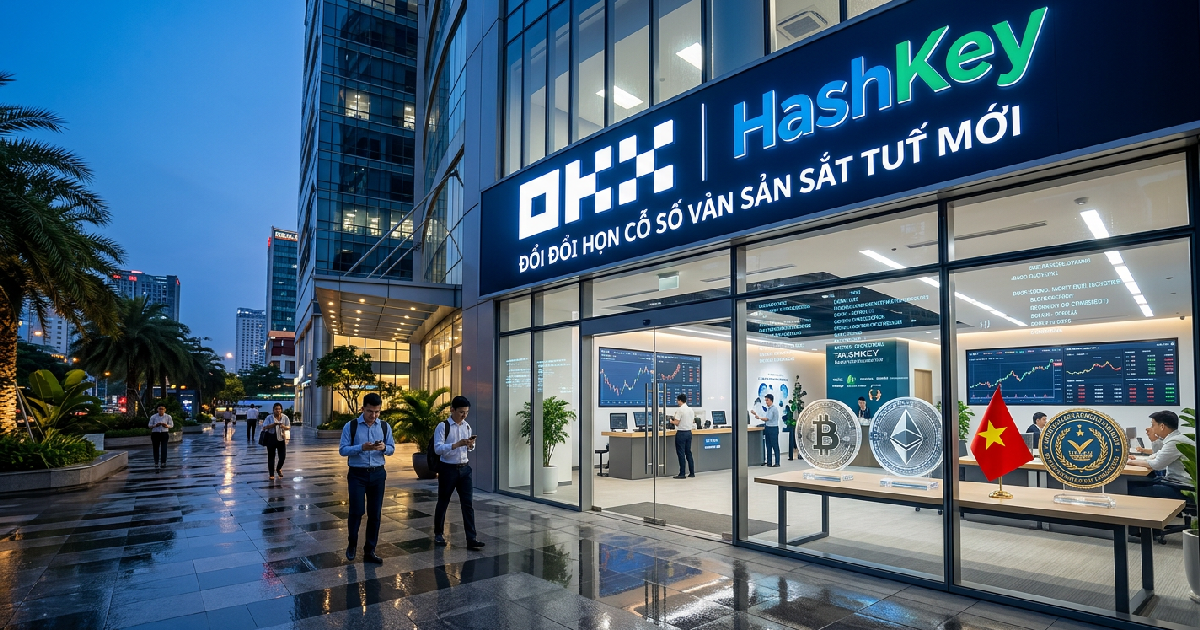
OKX and HashKey Back Vietnam Exchange Initiative as Licensing Push Gains Momentum
Asia’s digital asset giants are positioning themselves for a major shift in the Southeast Asian regulatory landscape. OKX and HashKey have reportedly committed strategic backing to a local exchange venture in Vietnam, a move that aligns with the country’s anticipated transition toward a structured licensing regime for virtual assets. This development comes as Vietnamese authorities signal an increased interest in establishing a pilot program to bring domestic trading under formal oversight.
For several years, Vietnam has maintained a reputation as one of the most active retail markets for digital assets globally. Much of this activity has occurred through offshore platforms, leaving a gap between high public adoption and the lack of a domestic legal framework. The reported involvement of OKX and HashKey suggests that major industry players are now willing to provide the necessary capital and technical support to help local entities meet the rigorous standards expected by state regulators.
The Push for Domestic Licensing
The move to back a local player is widely seen as a response to upcoming regulatory requirements. Vietnamese authorities have been exploring a sandbox or pilot initiative that would allow domestic platforms to operate within a set of state-defined parameters. For local firms, the main challenge is often meeting the substantial capital thresholds and operational standards that such programs are expected to demand.
By providing financial and institutional support, OKX and HashKey are helping to bridge this gap. While the specific financial details of the investment remain undisclosed, the primary goal appears to be ensuring the local platform is prepared for a competitive and highly regulated environment. This strategy allows international firms to establish a presence in the region through a local partnership, avoiding some of the complexities associated with entering the market as a foreign operator.
Strategic Regional Interests
This partnership highlights a broader trend where established Asian firms seek a deeper “on-the-ground” presence in emerging markets. For OKX, the move reinforces its position in a region known for its high levels of engagement with blockchain technology and decentralized finance. HashKey, which has built its reputation on a regulatory-first model in hubs like Hong Kong, brings experience in navigating complex legal requirements and compliance standards.
And for these companies, Vietnam represents more than just a trading hub. It is a central part of the broader regional economy for digital finance. By backing a local entity, they are moving away from the traditional model of serving markets through global portals and are instead positioning themselves as partners to the local financial ecosystem. This approach mirrors tactical moves often seen in the traditional banking sector, where international firms provide the resources for local partners to navigate domestic regulatory waters.
Addressing Capital Flight and Oversight
The motivation for the Vietnamese government likely centers on transparency and economic oversight. Reports suggest that authorities are interested in capturing the economic benefits of the sector while managing the risks associated with capital moving to offshore platforms. Without a licensed domestic alternative, regulators have limited visibility into the flow of digital assets within their borders.
The proposed pilot program is expected to serve as a test bed for future policy. It will allow officials to observe how local platforms handle risk management, consumer protection, and anti-money laundering protocols. If the program proves successful, it could pave the way for a more permanent licensing regime, effectively bringing a high-volume market into the fold of the formal financial system.
Outlook for the Vietnamese Market
The success of this venture will likely be viewed as a signal for other international investors interested in the region. Should the backed platform successfully navigate the pilot phase and meet the government’s requirements, it may encourage similar investments from other global digital asset firms.
But the path forward is not without hurdles. Operating within a government-led sandbox requires significant technical infrastructure and a commitment to ongoing dialogue with regulators. While the reported capital injection provides a foundation, the long-term viability of the venture will depend on its ability to adapt to a changing legal landscape. For users in Vietnam, these developments represent a move toward a more structured and regulated environment for digital asset trading in the coming years.