

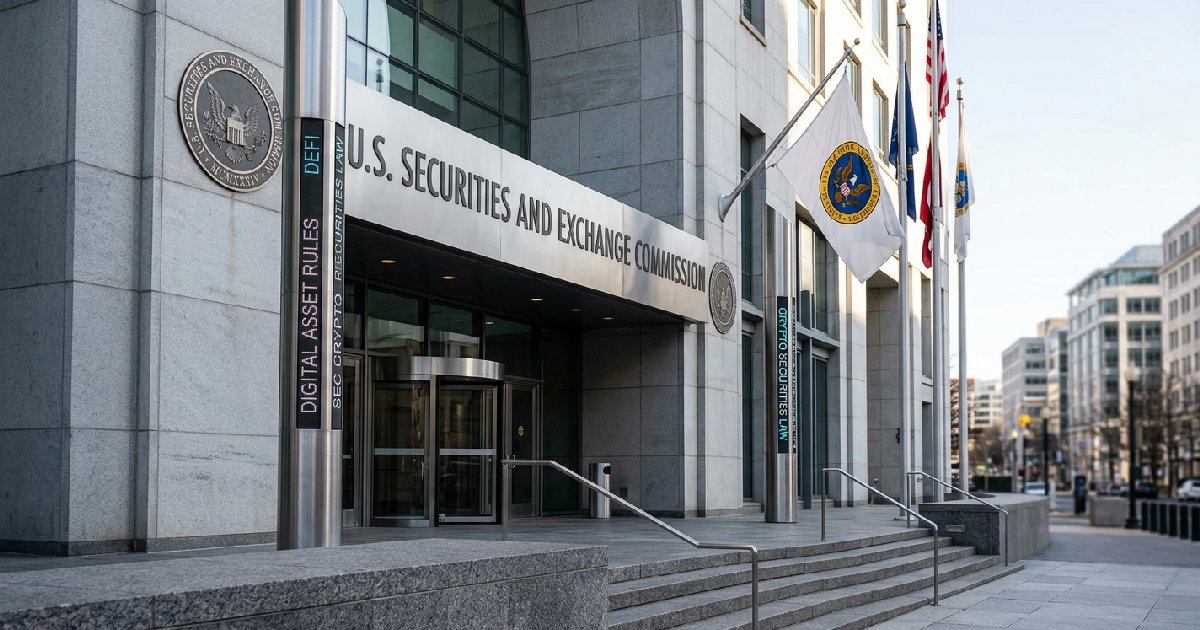
SEC Issues Draft Rules for Crypto Regulation
The Securities and Exchange Commission has formally released its long-awaited draft rules for the digital asset industry, marking the most substantial effort to date to bring crypto exchanges and token issuers under a unified regulatory framework. The proposal, made public early Monday morning, seeks to clarify which digital assets fall under the “investment contract” definition, while simultaneously introducing stringent reporting requirements for decentralized finance (DeFi) protocols.
For years, the industry has operated in a state of “regulation by enforcement,” a common grievance among exchange CEOs and legal experts. This new draft aims to move away from that piecemeal approach. But while the SEC suggests the rules provide much-needed clarity, early industry reactions indicate that the proposed compliance costs could fundamentally alter how crypto firms operate in the United States.
Defining the Boundary Between Security and Commodity
The core of the SEC’s draft centers on a revised “Digital Asset Test.” This framework builds upon the existing Howey Test but adds specific criteria for algorithmic stability and decentralized governance. Under the new rules, the SEC would have broader authority to classify a wide range of altcoins as securities if they rely on a centralized team for maintenance and “value enhancement.”
This development is particularly significant for the stablecoin sector. Following the legislative momentum of the New Clarity Act which blocks interest payments, the SEC is now proposing that any stablecoin marketed with a yield-bearing component be registered as a security. It’s a move that targets the “gray area” products that have proliferated during the recent market recovery.
The draft also includes a controversial section on “Communication Protocols.” In effect, the SEC wants to expand the definition of an exchange to include software developers and liquidity providers who facilitate trades, even if they never take custody of user funds. This would represent a massive shift for the DeFi space, which has historically argued that code is protected speech and cannot be regulated like a brokerage.
Impact on Market Liquidity and Exchange Operations
Major trading platforms are already bracing for the impact. If these rules are adopted in their current form, exchanges would be required to delist any asset that does not meet the new disclosure standards. This has led to renewed concerns about a “liquidity crunch” similar to the volatility risks currently facing Bitcoin as institutional signals begin to cool.
And it’s not just about what is being traded; it’s about who is trading. The SEC is proposing that any entity facilitating more than a specific threshold of monthly volume must register as a Broker-Dealer. Critics argue this is a “backdoor” attempt to kill off smaller, independent exchanges that lack the capital to meet the same compliance standards as Wall Street giants like Morgan Stanley.
Interestingly, the draft does provide a “pathway to compliance” for certain legacy tokens. There is a proposed three-year grace period for projects to achieve “sufficient decentralization” before being forced to register. However, the definition of “sufficient” remains frustratingly vague, leaving much to the discretion of future commission chairs.
The Road to Finalization and Legal Challenges
This draft is not law yet. It now enters a 90-day public comment period, which is expected to be flooded with pushback from advocacy groups and tech lobbyists. Given the aggressive nature of the DeFi requirements, legal experts suggest the SEC is almost certainly headed for a showdown in the Supreme Court.
The timing is critical. As the window for pure utility shifts dictates the market’s direction through 2026, the industry is desperate for a definitive resolution. If the SEC pushes through with these requirements, we could see a massive migration of talent and capital to offshore jurisdictions that have already established clearer, more permissive guidelines.
For now, the market is in a “wait and watch” mode. Bitcoin and Ethereum prices showed some initial intraday volatility following the announcement, but the real impact will likely be felt when the first set of enforcement actions based on these draft interpretations begins to materialize.
Frequently Asked Questions
Will these SEC rules make my crypto illegal?
Not at all. The rules are focused on the companies, exchanges, and developers who issue and trade these assets. For the average investor, it might mean you see fewer small-cap tokens available on major US exchanges, but it doesn’t criminalize the holding or personal use of digital currency.
How does this affect decentralized finance (DeFi) users?
It could make it harder. If the SEC successfully forces DeFi protocols to register, many of these “permissionless” platforms might implement KYC (Know Your Customer) requirements or block US IP addresses entirely. The goal of the SEC is to bring these platforms under the same oversight as traditional banks.
What happens if a project can’t meet the new requirements?
Under the current draft, if a project is deemed a security and cannot afford the registration and reporting costs, it would likely be forced to delist from US-based exchanges. This would effectively cut off the project from US capital, though it could continue to trade in international markets or on truly decentralized, peer-to-peer networks.