

Binance Wins Second U.S. Court Dismissal in Terrorism Lawsuit
Binance Wins Second U.S. Court Dismissal in Terrorism Lawsuit
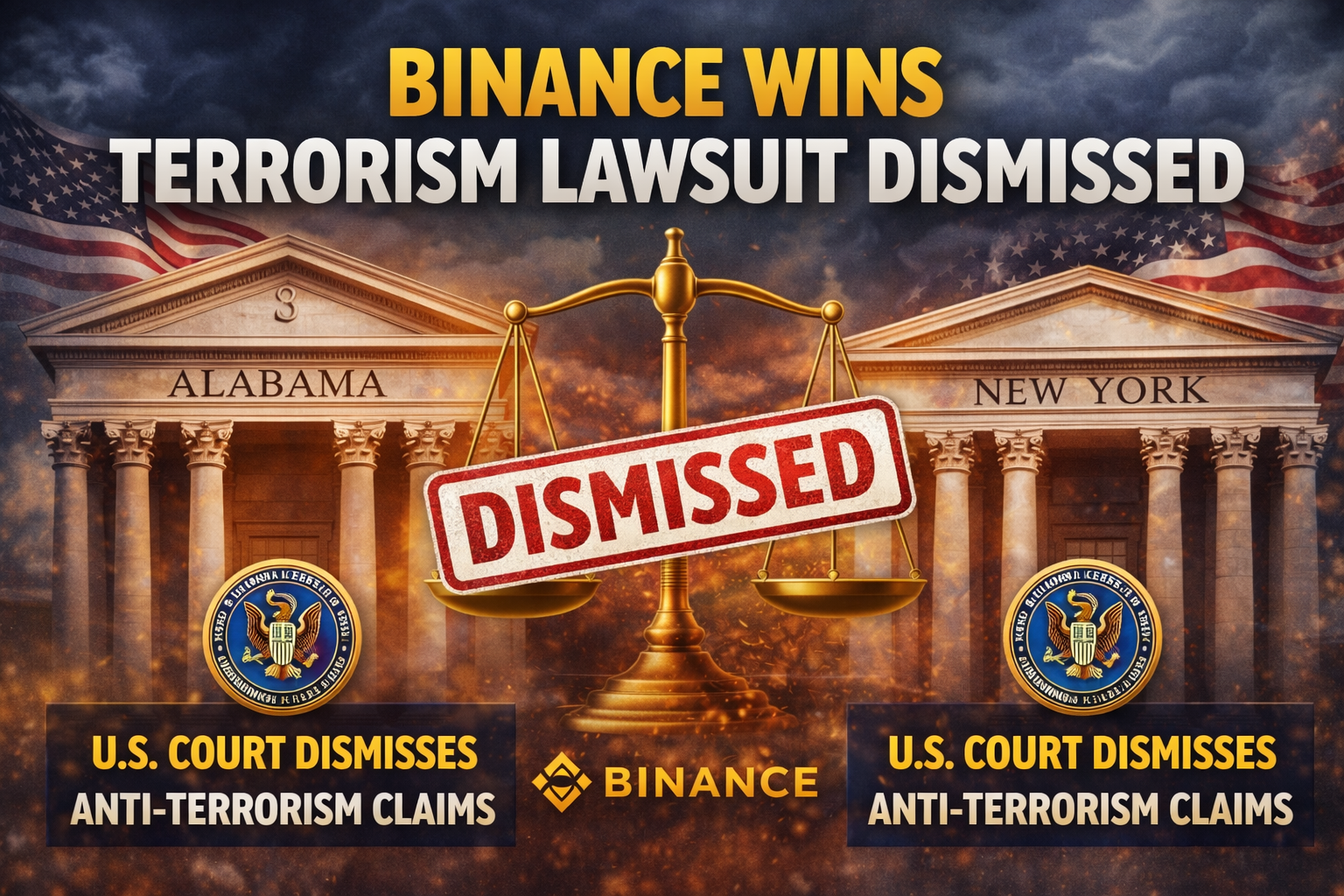
Cryptocurrency exchange Binance secured another legal victory in the United States after a federal court dismissed terrorism-related claims filed under the U.S. Anti-Terrorism Act. The ruling represents the second recent dismissal of similar allegations against the exchange, reinforcing Binance’s legal defense in a series of high-profile cases involving claims that crypto platforms facilitated terrorist activity.
A federal judge in Alabama dismissed the lawsuit after determining that the plaintiffs’ complaint lacked sufficient legal and factual grounding. The decision followed a separate ruling earlier this month from the U.S. District Court for the Southern District of New York, which also rejected terrorism-related claims targeting the company.
The back-to-back court outcomes may reshape the legal environment surrounding allegations that cryptocurrency exchanges indirectly enable illicit financing.
Federal Judge Rejects Anti-Terrorism Claims
The Alabama ruling concluded that the plaintiffs’ filing failed to meet the legal standards required under the Anti-Terrorism Act, which allows civil lawsuits against parties accused of providing material support to terrorist organizations.
In a 19-page decision, the judge described the complaint as a “shotgun pleading,” a legal term used when plaintiffs group multiple defendants together without clearly specifying each party’s alleged actions.
The court determined that the filing did not provide a concise and legally sufficient explanation linking Binance’s operations to specific acts of terrorism. Without that evidentiary structure, the case could not proceed.
While the claims were dismissed, the court granted plaintiffs the option to submit an amended complaint addressing the deficiencies before an April 10, 2026 deadline.
New York Court Previously Dismissed Parallel Lawsuit
The Alabama decision followed a similar outcome in New York, where a separate federal judge dismissed Anti-Terrorism Act claims brought by 535 plaintiffs.
Those plaintiffs alleged that Binance indirectly supported 64 terrorist attacks by allowing transactions connected to militant organizations.
In a 62-page opinion, the New York court ruled the plaintiffs failed to demonstrate that Binance had knowingly assisted terrorist groups, advanced attacks, or participated in any conspiracy related to the alleged incidents.
The court also found insufficient evidence linking exchange activity to operational planning or execution of attacks.
Binance Responds: Courts Found Allegations Without Merit
Binance framed the rulings as validation of its compliance efforts and legal defense strategy.
According to Eleanor Hughes, courts examined the allegations in detail and concluded they lacked merit.
She emphasized that cases involving terrorism financing require rigorous legal standards and concrete evidence rather than broad accusations.
The company also highlighted the decisions in a statement posted on social platform X, describing the dismissals as confirmation that the legal claims did not meet required thresholds.
Binance reiterated its commitment to compliance measures designed to prevent sanctions violations and illicit financial activity.
Legal Pressure on Crypto Platforms Continues
Although the dismissals represent an immediate victory for Binance, legal scrutiny of cryptocurrency exchanges remains intense.
Regulators and lawmakers across multiple jurisdictions continue examining whether digital asset platforms provide sufficient safeguards against money laundering, sanctions evasion, and terrorism financing.
Crypto exchanges typically rely on compliance systems that include:
- Know-Your-Customer (KYC) identity verification
- transaction monitoring tools
- blockchain analytics to detect suspicious activity
However, critics argue that decentralized networks and pseudonymous wallets can still create gaps that regulators must address.
Implications for Crypto Industry Litigation
The rulings may influence how future lawsuits targeting cryptocurrency platforms are structured.
Courts signaled that plaintiffs must demonstrate a direct and clearly articulated link between an exchange’s conduct and alleged terrorist activity. General claims that digital assets were used somewhere within an illicit network appear insufficient under the Anti-Terrorism Act’s legal framework.
For the broader crypto sector, the decisions could raise the evidentiary bar for civil litigation accusing platforms of enabling terrorism financing.
Legal analysts expect further challenges to emerge as policymakers refine regulatory frameworks governing digital asset markets.
What Comes Next
The plaintiffs now have an opportunity to revise their complaint before the April deadline. Whether they can produce additional evidence strong enough to revive the case remains uncertain.
Meanwhile, Binance continues navigating a complex global regulatory landscape that includes compliance disputes, licensing negotiations, and legal scrutiny in multiple jurisdictions.
For investors and market participants, the latest rulings highlight how courtroom decisions increasingly shape the operating environment for major cryptocurrency exchanges.
Source: Bitcoin.com News