

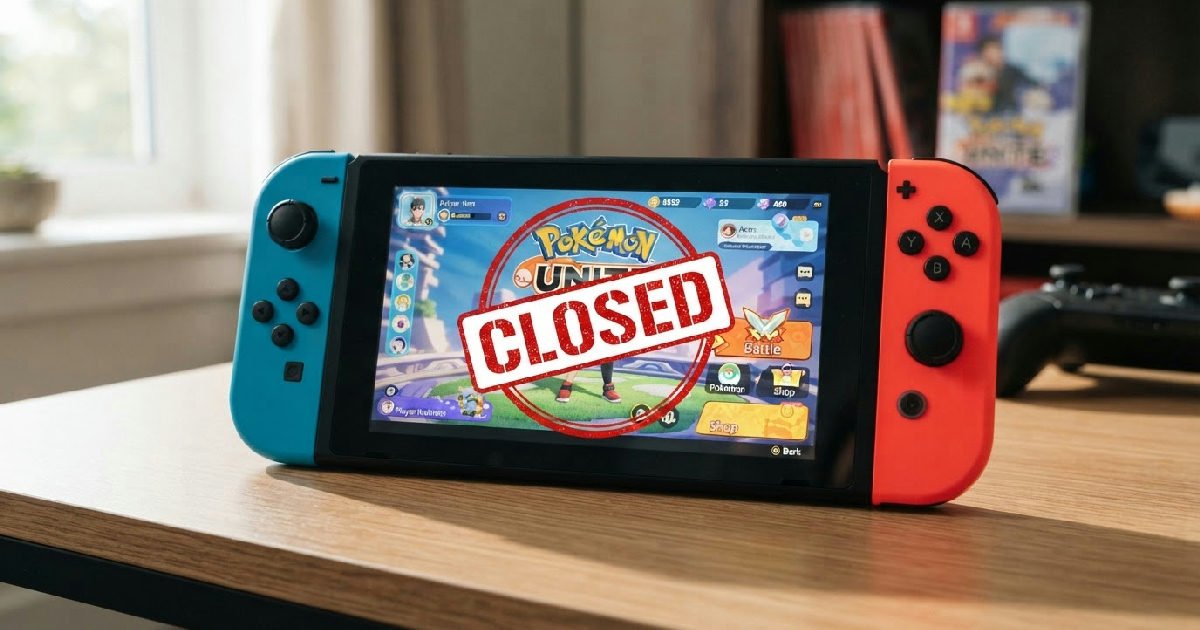
The Pokémon Company announces Pokémon Unite global shutdown
Players of Pokémon Unite, the free-to-play multiplayer online battle arena (MOBA) game, are facing an abrupt end to their journey. The Pokémon Company and developer TiMi Studio Group announced on 2026-10-27 that the game will officially cease all operations on March 23, 2027, at 00:00 UTC. This global shutdown impacts both the Nintendo Switch and mobile versions, which initially launched in 2021.
The immediate fallout for players started today, as the ability to purchase Aeos gems, the game’s premium in-game currency, has been suspended. While existing gems can still be used until the final shutdown date, new Unite Club memberships and automatic renewals have also been halted. Current members will retain their benefits until their subscription terms expire, but the path to new purchases has been closed.
The End of an Era for Pokémon Unite shutdown
The announcement marks the conclusion of a relatively short, but impactful, run for Pokémon Unite in the competitive mobile gaming space. Originally released in July 2021 for the Nintendo Switch, followed swiftly by its mobile debut, the title aimed to carve out a niche in the crowded MOBA market, leveraging the immense popularity of the Pokémon franchise.
Developed by TiMi Studio Group, a subsidiary of Chinese tech giant Tencent Games, the game offered a unique 5-on-5 battling experience with beloved Pokémon characters. The Pokémon Company said, “We offer our sincerest gratitude to the many Trainers who have played since service started for the Nintendo Switch version on July 21, 2021.” They promised a special event to thank players before the final closure.
The global shutdown, however, wasn’t entirely unprecedented. Pokémon Unite had already faced a regional discontinuation in Belgium and the Netherlands in November 2025. While no explicit reason was given at the time, industry observers widely believed this decision stemmed from loot box restrictions prevalent in those countries.
Belgium, in particular, has long maintained strict gambling laws that effectively outlaw the sale of loot boxes, and the Netherlands had also moved to ban them.
Loot Box Controversy and Regulatory Pressures
The game’s monetization model included a “Prize Machine” mechanic, which allowed players to spend in-game currency purchased with real money to acquire cosmetic items. This system closely resembled loot boxes, a mechanism under intense scrutiny by regulators worldwide. These mechanics often face legal challenges due to their resemblance to gambling, especially when real money is involved and the rewards are randomized.
For players in Belgium, the ban on loot boxes has been in effect for years, based on the country’s gambling law. The Netherlands followed suit with its own pursuit of a ban in July 2023. These regulatory landscapes significantly impact games that rely on such monetization, forcing developers to either alter their systems or withdraw from those markets entirely.
TiMi Studio Group: A Global Gaming Powerhouse
The developer behind Pokémon Unite, TiMi Studio Group, is a prominent subsidiary of Tencent Games, one of the world’s largest video game companies. Founded in 2008 in Shenzhen, China, TiMi has a formidable track record of creating highly successful mobile titles.
Their portfolio includes global hits like Honor of Kings, Call of Duty: Mobile, and Arena of Valor, which have garnered billions in revenue.
TiMi Studio Group’s revenue reached an estimated US$10 billion in 2020, solidifying its position as a global leader in game development. This financial strength underscores the high stakes involved in their projects, particularly those leveraging major intellectual properties. While Pokémon Unite did not achieve the same longevity as some of its stablemates, its development was backed by a studio known for mobile gaming dominance.
Tencent’s Strategic Vision in Mobile Gaming
Tencent Games, TiMi’s parent company, has long focused on the mobile gaming sector, especially live-service titles designed for sustained engagement. Their strategy often involves acquiring or partnering with developers to leverage evergreen IPs, a path they took with The Pokémon Company for Pokémon Unite. This approach has allowed Tencent to expand its global footprint and diversify its gaming portfolio across various genres.
The company’s designation as a ‘Chinese military company’ by the United States in 2025 has added another layer of complexity to its international operations. Despite geopolitical considerations, Tencent continues to be a dominant force, shaping trends in mobile gaming and influencing how global franchises like Pokémon are adapted for different markets.
These strategic moves highlight the broader business environment in which games like Pokémon Unite operate.
The Competitive MOBA Landscape and Player Engagement
When Pokémon Unite launched, it entered an already crowded and fiercely competitive multiplayer online battle arena market. Established giants such as League of Legends: Wild Rift and Mobile Legends: Bang Bang dominated the mobile MOBA space, commanding massive player bases and robust esports scenes. Carving out a significant share against these entrenched titles proved challenging, even with the powerful Pokémon brand.
Live-service games, by their nature, require continuous content updates, events, and community management to maintain player interest and engagement. Declining player counts and revenue often lead publishers to re-evaluate the viability of ongoing support. While no official reason was given for the global shutdown, a drop in sustained engagement or profitability is a common factor behind such decisions in the free-to-play model.
The constant innovation in the gaming sector means that publishers continually seek ways to attract and retain audiences. This includes the emergence of highly anticipated game releases, each vying for player attention and market share.
Impact of Game Shutdowns on Players
For players, the shutdown of a live-service game represents a significant loss of invested time and, for some, money. Digital ownership in such titles is inherently transient, tied to the ongoing operation of servers and developer support. The inability to purchase new in-game currency is often the first concrete sign of an impending closure, giving players a window to utilize their remaining assets.
The Pokémon Company has announced a special event, starting November 12, 2026, to allow players to review ‘certain records and in-game content’ and earn special Unite coins for past game items. This gesture aims to provide a sense of closure and appreciation for the community that supported the game.
It’s a common practice in the industry to offer such farewell events, acknowledging the player base before the final curtain falls on a digital world.
Broader Implications for Live-Service Gaming
The shutdown of Pokémon Unite is indicative of a broader trend within the video game industry, particularly in the competitive mobile and live-service sectors. Even titles backed by powerful brands and major developers can struggle to maintain long-term viability in a market constantly vying for player attention. The bar for success is exceptionally high, demanding constant innovation and adaptation.
This event also highlights the ongoing debate around monetization strategies and regulatory pressures. The early closure in Belgium and the Netherlands due to loot box concerns serves as a stark reminder of how regional laws can shape a game’s global strategy. Developers must increasingly navigate a complex legal landscape while striving to create engaging experiences.
Regulatory scrutiny across various digital economies, including aspects of in-game economies, continues to evolve.
The closure of Pokémon Unite offers a case study in the volatile nature of live-service games. While its run may have been shorter than some, it provided a unique Pokémon-themed MOBA experience. The shutdown leaves a void for its dedicated player base, but also underlines the challenges and realities faced by developers and publishers in sustaining online games in a dynamic market.