

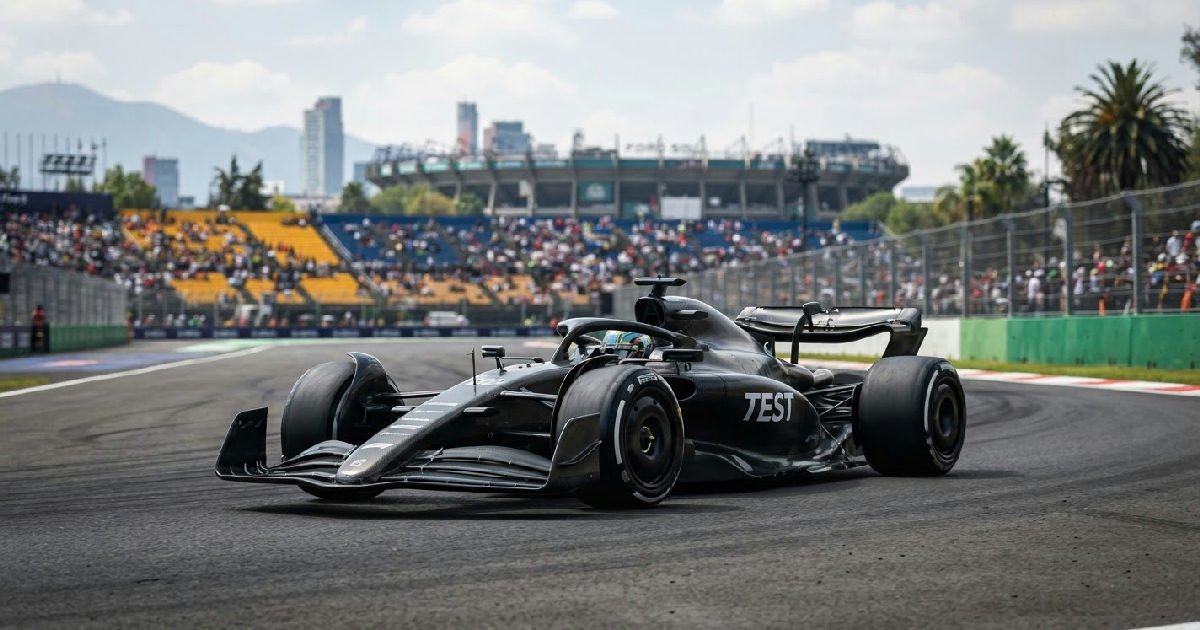
Mexico City Grand Prix presents complex F1 challenges to teams
Formula 1 teams and manufacturers are preparing for an unparalleled test at the 2026 Mexico City Grand Prix, running from October 30 to November 1, 2026. The high-altitude Autódromo Hermanos Rodríguez circuit, coupled with significant new power unit and aerodynamic regulations, and an extensive track resurfacing, has created a unique set of challenges.
Teams will navigate more unknowns than ever before as they hit the track.
F1 Mexico challenges from high-altitude air
This confluence of factors promises to reshape race strategies and demand exceptional adaptability from engineers and drivers alike. It’s a stark departure from previous seasons, with the removal of a crucial power unit component and the introduction of active aerodynamics fundamentally altering the competitive landscape.
The Autódromo Hermanos Rodríguez, situated over 2,200 meters (7,200 feet) above sea level, stands as the highest-altitude venue on the Formula 1 calendar. This extreme elevation results in approximately 20% lower air density, which profoundly impacts engine performance and reliability.
In thinner air, turbochargers are forced to work considerably harder to achieve the necessary boost pressure and airflow. This increased workload puts immense strain on the component, leading to significantly higher operating temperatures than under normal conditions and potential reliability concerns.
The MGU-H void and turbocharger strain
A pivotal change for the 2026 season is the complete removal of the Motor Generator Unit – Heat (MGU-H) from the power unit architecture. The MGU-H previously assisted in managing turbocharger boost and counteracting turbo lag, making its absence a major concern for manufacturers at altitude.
Honda’s Trackside General Manager and Chief Engineer, Shintaro Orihara, highlighted this challenge, noting that without MGU-H support, achieving sufficient boost pressure is “quite challenging.” He explained that even in idle conditions, the lack of MGU-H makes a “big difference from last year,” intensifying the turbo lag issue for all manufacturers.
The elimination of the MGU-H means that the turbocharger must now compensate for the thinner air without electrical assistance. This increases mechanical strain and raises the risk of turbo lag, where there’s a delay in power delivery after a driver presses the throttle. The consequences could extend to engine operation, potentially leading to lower power output if desired boost levels aren’t met.
Honda’s countermeasures and Ferrari’s potential edge
Shintaro Orihara confirmed that Honda has implemented “countermeasures” for turbo lag, which showed positive effects in Austin. However, he stressed that Mexico presents the “ultimate test” due to its unique altitude. Engineers at Honda’s Sakura facility are continually working to optimize turbo lag, exploring options like harvesting strategy with the MGU-K.
Mercedes driver George Russell suggested that Scuderia Ferrari might hold an advantage in Mexico. Ferrari is known to utilize a smaller turbocharger, which features a turbine wheel with less mass and inertia. This design allows the turbo to spool up more quickly, minimizing turbo lag and potentially offering a performance edge in the thin air conditions.
While a smaller turbo typically aids in response, it can also limit peak horsepower compared to larger designs. Teams will be closely monitoring free practice sessions to understand the real-world impact of these differences and how various power units cope with the demands of the Autódromo Hermanos Rodríguez.
Active aerodynamics reshape downforce strategy
Beyond power unit intricacies, the 2026 regulations introduce active aerodynamics, further complicating the F1 Mexico challenges. This new system allows cars to change front and rear wing configurations dynamically, optimizing downforce in corners and reducing drag on straights. It marks a significant shift from previous aerodynamic approaches.
Historically, teams have run Monaco-level wing settings in Mexico to counteract the reduced air density, which typically slashes aerodynamic downforce by about 20-25%. However, even these extreme configurations only yield grip levels comparable to those found on low-downforce tracks like Monza at sea level.
Less grip for drivers
Red Bull driver Max Verstappen highlighted how active aerodynamics have altered teams’ approach. He noted that while large wings previously compensated for thin air, “now you basically just run one wing.” This change leads to “a lot less downforce on the car,” exacerbating the grip challenge.
Isack Hadjar, another driver, anticipated that the weekend will be “slippery as hell” for competitors. Lewis Hamilton echoed these concerns, estimating “25 or 30% less downforce than the last time we drove here.” This reduced grip will demand even greater precision and skill from drivers throughout the Grand Prix.
The FIA has confirmed three “Straight Mode” (SM) zones for the Mexican Grand Prix. In these designated areas, both front and rear wings will transition to a lower-drag configuration, allowing for greater top speeds on the straights. This dynamic aero management adds another layer of complexity for engineers to optimize and for drivers to adapt to.
Resurfaced track and soft tyres add uncertainty
Adding to the regulatory complexities, much of the Autódromo Hermanos Rodríguez circuit has undergone extensive resurfacing for 2026. Sections from Turn 16 to Turn 1 and from Turn 7 to Turn 16 have received new asphalt, leaving only the first sector largely unchanged. This introduces a significant variable that teams have yet to fully account for in their simulations.
Fresh asphalt generally offers a smoother surface and potentially higher grip levels. However, it also presents unknowns regarding track evolution, tire behavior, and particularly the propensity for graining. Aston Martin’s chief trackside officer, Mike Krack, acknowledged the potential for improved grip but emphasized the need to assess the new surface during free practice.
Grip levels and tyre degradation questions
Pirelli has opted for the C3 (Hard), C4 (Medium), and C5 (Soft) compounds for this event – the three softest tires in its 2026 range. This selection differs from 2025, when the C2 served as the hard compound. The combination of these soft compounds and the new asphalt creates substantial unknowns regarding tire degradation and optimal race strategy.
While a one-stop strategy remains a viable option, a two-stop race using medium and soft tires is also anticipated by some teams. More severe graining, a common issue with softer compounds, could bring the harder C3 tire into play during the race. The unpredictability of tire performance on the new surface will be a crucial element of the weekend.
The broader regulatory overhaul
The 2026 Formula 1 season marks a significant regulatory overhaul, with substantial changes beyond just the MGU-H removal and active aerodynamics. These broader shifts contribute to the overall unpredictability teams face in Mexico and for the season ahead.
The new power unit configuration now features a 50-50 split between internal combustion engine (ICE) and electrical power, a dramatic shift from the previous 80% ICE and 20% electrical split. The ICE